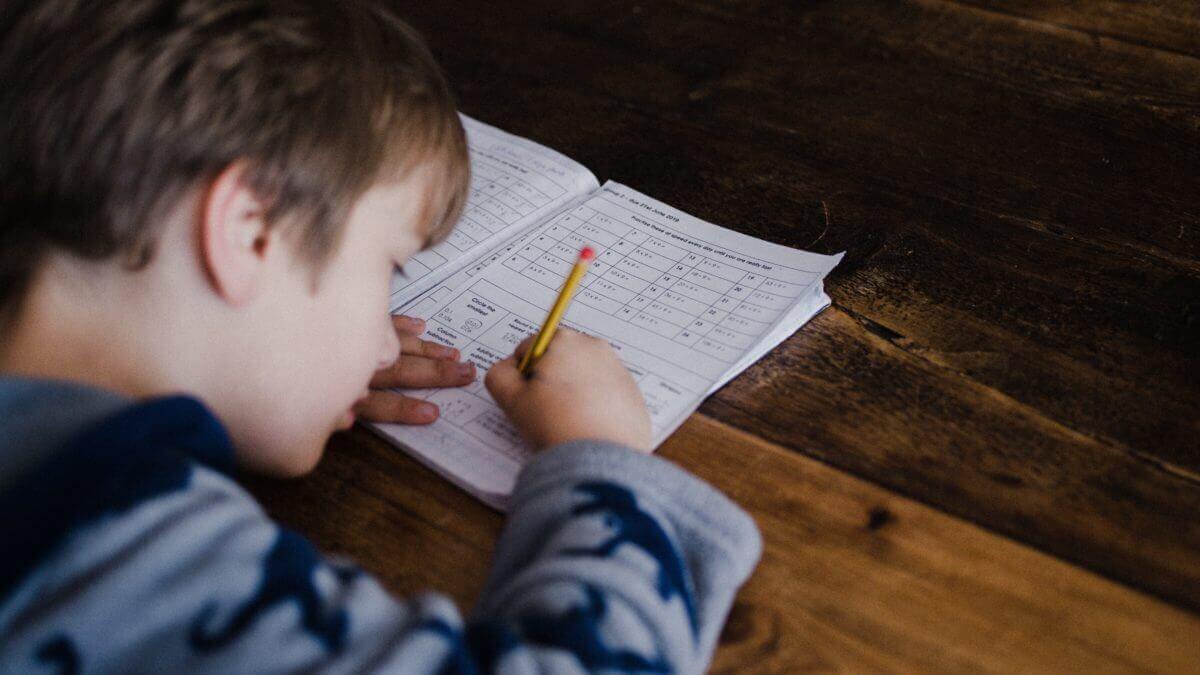
The COVID-19 outbreak has forced school closures across the country. Suddenly, parents and caregivers are being turned into homeschoolers, creating makeshift schedules and study tables as parents worry about their children losing academic progress. These concerns are heightened for parents of children with Attention-Deficit Hyperactivity Disorder (ADHD), learning disabilities, and other special needs. With circumstances changing so fast, teaching your own children at home may seem daunting and scary. Gratefully though, there are many resources and tips from experienced homeschoolers to help make the transition a bit easier.
Commit to flexibility
It's very important to keep in mind that temporary homeschooling can't replicate a typical school environment. Without the resources that make a traditional classroom work, kids won't be as focused on work. Social interaction is restricted, and kids will miss having regular interaction with their friends. Lessons won't be as professional as kids may be used to. Due to the unusual circumstances, it can be extremely helpful to create new priorities and acknowledge that each day can bring new challenges. Daily goals may need to be altered or set aside to meet your child's specific needs. Be gentle with yourself and recognize that kids are doing the best they can under very difficult circumstances. On any given day the goal may be not to complete all the school-assigned homework, but simply to make it through the day with a minimum of disruption.
Allow kids to have a say in their own learning
Outside of the homework packets and online participation mandated by many schools, all kids have things they're passionate about. Dinosaurs, sea creatures, fashion, space, comics and anime… the list of things that light a spark in kids is endless. There are many ways to use everyday activities to teach lessons about coding or 3-D design (video games), chemistry (baking), biology (bugs, flowers), geometry and physics (carpentry, Legos, sewing), and art to name only a few. Plan some shared activities such as cooking or reading together as a way of engaging in mutually shared interests. Encourage kids to see that learning doesn't just happen within textbooks but is gained with practical skills used every day.
Start with a schedule
Children with special needs often have difficulty when their schedules become disrupted. Try to maintain the same schedule you had when your child was in school: get up at the same time, go to bed at the same time, and try and have your meals at similar times. For young children, nonverbal children, and children with behavioral problems, it can be helpful to break the day up into one-hour increments with one small task assigned to each hour. Like all children, children with special needs do better when they know what's coming up and avoid being surprised by unexpected demands. They also have a harder time structuring their own time, requiring more support from adults.
Make sure your schedule has variety, adaptability, and plenty of breaks
Most educators recommend creating a "school at home" schedule which can include not just academic time but also time for art, music, screens (TV/games), free time, and rest. Visual schedules, especially with pictures, work very well for kids with disabilities by helping them "see" what you mean. Children can help create these schedules with you by cutting out pictures from magazines, helping empower them with a voice in how their days will look. You can also find some printables for making a visual schedule at cdn.thisreadingmama.com: https://cdn.thisreadingmama.com/wp-content/uploads/2017/08/VSSC-SF-TRM.pdf Be sure to take at least two or three movement breaks during the day by taking a walk, playing catch, or going on a scavenger hunt. Being kept inside all day can be very hard on children and fresh air can help maintain positive moods and overall wellbeing. And if you find that your child is struggling to stay focused or on schedule despite all your efforts, allow them to take extra time in preferred activities, screens, or social media. Some days children are less able to stick with the program – you can adapt to their needs that day and try again tomorrow.
Utilize existing resources
There's a wealth of resources available for online study, with many companies offering free access to normally-paid content for as long as the current crisis lasts. For children who thrive on screen time, there are museum-walkthroughs, interactive tutorials, podcasts, and much more specially designed to engage kids in learning. We've collected some helpful options at the end of this piece to get you started.
Keep a healthy perspective and positive attitude.
Time spent as a homeschool will be temporary. Acknowledging that everyone – parents and kids – are doing their best in trying circumstances can make a big difference in your feelings towards this experience. Children will continue to grow, learn, and make progress during this time, even if they make less progress than they would if regular school had not been interrupted. Resilience is a powerful lesson for children, especially those who become frustrated easily. Seeing parents model flexibility, good humor, ongoing interest, and unconditional support helps children build those skills for themselves, which will serve them well when they're finally able to return to their classrooms.
Dr. Catherine Buksar, Psy.D
Licensed Clinical Psychologist
Clarity Clinic NWI
Resources:
BlocksCAD: Build math and computer science skills by using specialized 3D CAD (computer-aided drafting) software. https://www.blockscad3d.com/distance_learning
Breezy Special Ed: Teacher-created materials made free or reduced-cost for parents to use at home https://www.teacherspayteachers.com/Store/Breezy-Special-Ed/Search:%23homepacket
BrainPop and BrainPop Jr.: Interactive animated activities that allow students make movies out of images, build maps and develop their block-based coding skills. https://www.brainpop.com/ and https://jr.brainpop.com/
Club Oasis: A free STEM club offers DYI STEM labs, live classes, coding lessons and live pop-ups. https://social.oasismatters.com/
Crash Course: Short videos developed by Hank and John Green that cover nearly every subject. Examples include psychology, computer science, film history and mythology. https://www.youtube.com/user/crashcourse
Duolingo: Learn a new language https://www.duolingo.com/
Read-Aloud Revival: booklists for all types of readers, good for solo and read-together time. https://readaloudrevival.com/
Spreadsheet of companies offering free subscriptions due to school closings. http://www.amazingeducationalresources.com/
Scholastic Learn-At-Home: Day by Day projects based on Scholastic's leveled material
https://classroommagazines.scholastic.com/support/learnathome.html
Storyline Online: Books read out-loud by celebrities. https://www.storylineonline.net
Toy Theater: A fun website with math, art and reading games.http://toytheater.com/
Vizzle: Specialized lessons for kids with ASD. https://home.govizzle.com
Wonderopolois.com: Learn about 2,000-plus wonders of the world. https://wonderopolis.org
List of 12 museums where you can take virtual tours. https://www.travelandleisure.com/attractions/museums-galleries/museums-with-virtual-tours?fbclid=IwAR3JEcNd2d19W0iyP15SEK86TrBAgJmrWVESE_PiCEVviNYYbR8GQLImsf8
A list of 10 great podcasts for tweens/teens
https://www.commonsensemedia.org/blog/10-must-listen-podcasts-for-tweens-and-teens
A variety of websites for learning about music
https://cornerstoneconfessions.com/2012/08/the-ultimate-list-of-online-music.html